
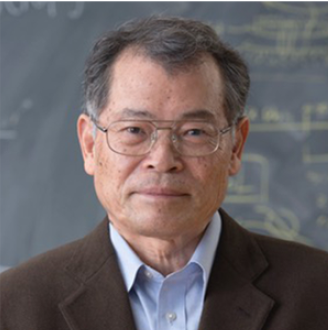
Shigenori Maruyama
Futurist / Professor Emeritus, Tokyo Institute of Technology (now Institute of Science Tokyo) / Doctor of Science
Born in Tokushima Prefecture in 1949. Shigenori Maruyama made significant contributions to the development of geophysics through his proposal of the theory of plume tectonics. Alongside his research into the origin and evolution of life, he has pursued transdisciplinary science for many years, including the Decoding the Whole Earth History project. Today, his work focuses on the potential for a hydrogen-driven energy revolution and the transformation of future society.
Achievements and Research
Shigenori Maruyama, Professor Emeritus at Tokyo Institute of Technology, is a geoscientist who has long studied the origin and evolution of life. In recent years, he has described himself as a futurist, exploring how an energy revolution based on hydrogen and other technologies could transform society.
He is known for proposing the theory of plume tectonics, which seeks to explain large-scale changes in the Earth through mantle convection. Over many years of transdisciplinary research spanning geology, geoscience, geophysics, astronomy, biology, and other fields, he has also been involved in the Decoding the Whole Earth History project, an effort to reconstruct the history of the Earth as comprehensively as possible.
With a geological hammer in hand, Maruyama has conducted field research in more than 40 countries, from Greenland to the Solomon Islands. Through this cross-disciplinary work, he has investigated the conditions required for life to emerge on Earth. Based on his research, he has proposed that 51 conditions must occur in sequence for advanced life capable of developing civilization to arise. In seeking to explain the mechanisms underlying the origin of life and the evolution of the Earth, he has also proposed a new model that he calls “post-Darwinian evolutionary theory.”
Since 2019, drawing inspiration from the hypothesis that the environment on the early Earth at the time life emerged was rich in hydrogen, Maruyama has investigated combinations of rocks and minerals capable of producing hydrogen, as well as mineral catalysts that could have facilitated molecular evolution. This work led him to devise a hydrogen-production technique known as the “olivine method.”
He has reported that this method can generate large quantities of hydrogen at approximately one-tenth the cost of conventional methods. A patent application has been filed for the technology. Because the method has the potential to produce locally generated, locally consumed green hydrogen without reliance on fossil fuels, Maruyama envisions a future in which individual households are equipped with their own hydrogen generators, creating a decentralized energy system. Demonstration experiments toward this goal are ongoing.
Career
1977–1989
Research Assistant, University of Toyama
1981–1990
Visiting Researcher, Stanford University, USA
1989–1992
Associate Professor, College of Arts and Sciences, The University of Tokyo
1993–2019
Professor, Faculty of Science, Tokyo Institute of Technology
Professor, Graduate School of Science and Engineering, Tokyo Institute of Technology
Professor, Earth-Life Science Institute (ELSI), Tokyo Institute of Technology
2019–present
Professor Emeritus, Tokyo Institute of Technology
(now Institute of Science Tokyo)
Concurrent Appointments
2000–2003
Alan Cox Visiting Professor, Stanford University, USA
2013–2014
Specially Appointed Professor, Institute for Study of the Earth’s Interior, Okayama University
Education
1972
Graduated from the Faculty of Education, Tokushima University
1977
Completed the doctoral program at the Graduate School of Science, Nagoya University
Doctor of Science (Earth Science)
Doctoral dissertation:
Geology and Petrology of the Kurosegawa Zone, Kochi City, SW Japan
Nagoya University, 1980
Honors and Awards
1978 — Research Encouragement Award, Geological Society of Japan
1982 — Toyama Award, Academic Research Category, Toyama Prefecture
1995 — Best Paper Award, Geological Society of Japan
1998 — Best Paper Award, Geological Society of Japan
2000 — Fellow, American Association for the Advancement of Science (AAAS)
2002 — Geological Society of Japan Award
2006 — Medal with Purple Ribbon
2012 — Thomson Scientific Research Front Award, Thomson Reuters
2014 — Honorary Fellow, Geological Society of America (GSA)
2023 — The Order of the Sacred Treasure, Gold Rays with Neck Ribbon
Research Projects
Decoding the Whole Earth History
Led interdisciplinary collaborative research involving more than 100 research institutions in 58 countries around the world.
Whole Earth Dynamics
Led research into the mechanisms governing complex interactions among superplumes, plate tectonics, core dynamics, and changes in the atmosphere, oceans, and biosphere.
Origin of the Life-Bearing Earth
Led research aimed at understanding when, where, and how Earth became a planet capable of supporting life.
Video Series: The Whole History of the Earth and Life
A YouTube video series produced with Shigenori Maruyama as executive producer. The Whole History of the Earth and Life presents the epic history of the Earth and the emergence and evolution of life through time-lapse imagery and CGI animation, exploring the complex relationships among geology, biology, and living systems.
Maruyama has also participated in numerous other projects, including “Global Warming Theory and Lessons from Decoding the Whole Earth History.”
Books, Papers, and Other Publications
His body of work comprises approximately 40 books and other publications, 306 research papers, 90 review articles, and 309 conference presentations. His publications had received 19,665 citations as of July 2023, according to Web of Science.
Further details on his publications are available through:
Selected Books
“The early Archean Acasta Gneiss Complex: Geological, geochronological and isotopic studies and implications for early crustal evolution.” Elsevier, Amsterdam, 2007.
“Overview of the tectonic evolution of the Kokchetav Massif and the role of fluid in subduction and exhumation.” In The Diamond-Bearing Kokchetav Massif, Kazakhstan, 2002.
“History of the Earth and life.” In Geochemistry and the Origin of Life, 2002.
“Physico-chemical environment of an Archean mid-ocean ridge: Estimate of seawater depth and hydrothermal fluid composition.” In Geochemistry and the Origin of Life, 2002.
“Pressure–temperature–time path of the Kokchetav UHP metamorphism deduced from mineral inclusions and SHRIMP geochronology of zircons.” In The Diamond-Bearing Kokchetav Massif, Kazakhstan, 2002.
“Global distribution and petrotectonic characterizations of UHPM terranes.” In The Diamond-Bearing Kokchetav Massif, Kazakhstan, 2002.
“Mineral inclusions in zircon from the Kokchetav Massif: An excellent container of UHP minerals.” In The Diamond-Bearing Kokchetav Massif, Kazakhstan, 2002.
“Geology of the Kokchetav Massif.” In The Diamond-Bearing Kokchetav Massif, Kazakhstan, 2002.
『学研の図鑑 地球』(共著/学習研究社、1998年)
『生命と地球の歴史』(共著/岩波書店、1998年)
『46億年 地球は何をしてきたか?』(岩波書店、1993年)
『冥王代生命学』(共著/朝倉書店、2022年)
『地球のあゆみえほん 46億年のれきし』(監修/PHP研究所、2017年)
『図解 もっと知りたい日本列島』(監修/宝島社、2016年)
『NHKカルチャーラジオ 科学と人間 地球と生命の46億年史 』(NHK出版、2016年)
『地球史を読み解く』(放送大学教育振興会、2016年)
『宇宙生命論』(共編著/東京大学出版会、2015年)
『21世紀地球寒冷化と国際変動予測』(東信堂、2015年)
『小学館の図鑑NEO(10~18巻)』(共著/小学館、2013年)
『3・11本当は何が起こったか:巨大津波と福島原発』(監修/東信堂、2012年)
『今そこに迫る「地球寒冷化」人類の危機』(ベストセラーズ、2009年)
『あっ!と驚く「地球」の秘密』(監修/PHP研究所、2009年)
『火星の生命と大地46億年』(共著/講談社、2008年11月28日)
『「地球温暖化」論で日本人が殺される!』(共著/講談社、2008年)
『地球温暖化対策が日本を滅ぼす』(PHP研究所、2008年)
『科学者の9割は地球温暖化CO2犯人説はウソだと知っている』(宝島社、2008年)
『「地球温暖化」論に騙されるな!』(講談社、2008年)
『小学館の図鑑NEO 地球』(監修/小学館、2007年)
『ココロにのこる科学のおはなし』(数研出版、2006年)
『プルームテクトニクスと全地球史解読』(共編著/岩波書店、2002年)
…and approximately 40 other books and publications.
Selected Papers
Origins of building blocks of life: A review, Norio Kitadai, Shigenori Maruyama, Geoscience Frontiers, 9(4) 1117–1153, Jul 1, 2018, Peer-reviewed
A possible anorthositic continent of early Mars and the role of planetary size for the inception of Earth-like life, James M. Dohm, Shigenori Maruyama, Motoyuki Kido, Victor R. Baker, Geoscience Frontiers, 9(4) 1085–1098, Jul 1, 2018, Peer-reviewed
In total: 306 research papers and 90 review articles.
Proposals, Recommendations, Lectures, and Related Activities
Proposals for Future Society and a Hydrogen-Based Society
- “The 2020 Challenge and Near-Future Studies: Futures Studies as a Science of Warning”
- “The 2050 Challenge and the Energy Issue: Hydrogen”
- “A Method for Low-Cost, Large-Scale Hydrogen Production” (patent application filed)
- “2025–2050: The Greatest Period of Challenge in Human History — The Energy Crisis and the Unprecedented Expansion of the Human Sphere: How Can We Minimize the Risks?”
- “Southeast Asia, Centered on Indonesia, as the World’s Leading Resource Region in the Coming Hydrogen Age Beyond Fossil Fuels”
Proposals for Earthquake Prediction and Tsunami Mitigation
- “Elucidating the Mechanism of the 2011 Tohoku Earthquake: Earthquake Prediction Has Become Possible”
- “Earthquake Prediction through Seafloor GPS Monitoring at Two Sites on Opposite Sides of the Trench Axis: Prediction Could Become Possible with 300 Monitoring Stations around the Japanese Archipelago”
- “Tsunami Disasters Caused by Large-Scale Submarine Landslides of Gravitationally Unstable Sediments on the Landward or Seaward Side of Ocean Trenches”
- “Removal of Gravitationally Unstable Sediments from Landward and Seaward Slopes (Removal by Controlled Blasting Using Underwater Drones)”